
Flower Guild Compendium
“O worship the LORD in the beauty of holiness.” (Psalm 96:9 KJV)
An Anglican Liturgical Flower Arranging Guide
Floral arrangements are offerings of beauty and devotion.
Each bloom, color, shape, and fragrance can reflect the rhythm of the church year and the glory of God’s creation.
Through thoughtful design and prayerful preparation, floral arranging and arrangements become a silent hymn of praise and a part of the table we are setting for our Lord.
Let the Flowers Serve the Liturgy
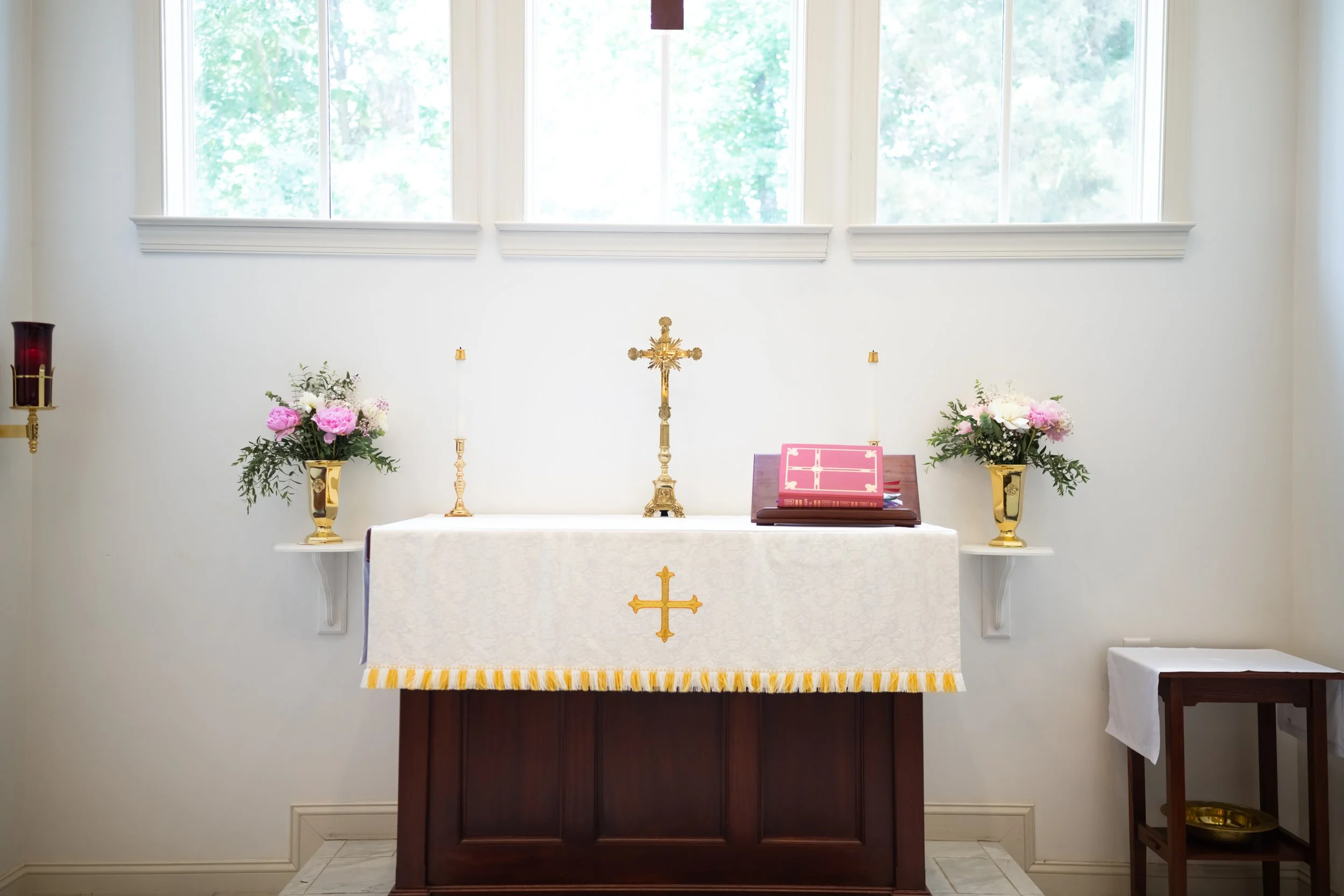
The focal point of the Church is the altar, where Christ meets His people in Word and Sacrament. Floral arrangements should support this rather than compete with it.
When arranging flowers, it may be helpful to ask yourself:
Does this arrangement draw the eye toward the altar?
Does this arrangement complement the season of the Church Year?
Does this arrangement contribute to the atmosphere of reverence?
If the arrangement invites worship rather than distracts from it, then it has fulfilled its purpose.
Throughout Holy Scripture, God reveals His care for creation through images of flowers, trees, vines, and herbs.
Many of these passages are appointed in the 1928 Book of Common Prayer Lectionary as Daily Office readings, affording parishioners the opportunity to encounter them time and time again.
Consider liturgical vestments and altar hangings when preparing flowers. While not required, selecting florals that compliment the seasonal liturgical colors can further enhance the worship experience.
White: Christmas, Easter, weddings, baptisms, major feasts and saints who did not die as martyrs
Red: Pentecost, ordinations, feasts of martyrs, Palm Sunday, Good Friday
Purple: Advent (greenery only) and Lent (no flowers)
Green: Epiphany and Trinity
Gold: Christmas and Easter
Principles of Floral Design
-
Simplicity
Simplicity often reflects confidence, restraint, and peace. Leave space for each flower to be seen and appreciated. Allow greenery and branches to provide shape and movement.
-
Scale
Floral arrangements should complement the altar without overwhelming it. The overall weight of the arrangement should be balanced with the weight of the vessel that holds it. Keep the heaviest flowers closer to the rim of the vessel in order to avoid a top-heavy arrangement.
-
Harmony
While there is beauty in symmetry, there is also beauty in the natural variations of freshly cut flowers. Not every flower will be identical, and not every stem will bend exactly as planned (no matter how many times you try to tell it what to do!). Seek balance and harmony.
-
Greenery
Foliage establishes the overall shape of an arrangement, provides contrast, support more delicate blooms, and allow blossoms to shine without appearing crowded. Many varieties also add fragrance to the arrangements.
-
Prayerful Heart
Offer your work faithfully, receive each opportunity with gratitude, and remember that the Lord delights not in perfect arrangements, but in loving service offered for His glory.
Gathering Flowers and Supplies
Sourcing Flowers and Greenery
Church Property
Home Gardens
Commercial Sources (such as Trader Joe’s, Costco, Lowe’s Foods, Harris Teeter, Wegman’s, or the State Farmers Market)
The exact number of flowers needed will vary depending upon the season, the size of the vessels, and the actual flowers themselves. Aim for odd numbers of each individual type of flower. These “recipes” provide a helpful starting point.
For smaller arrangements:
3-5 large statement flowers (approximately palm-sized)
2-3 smaller accent flowers
Assorted greenery
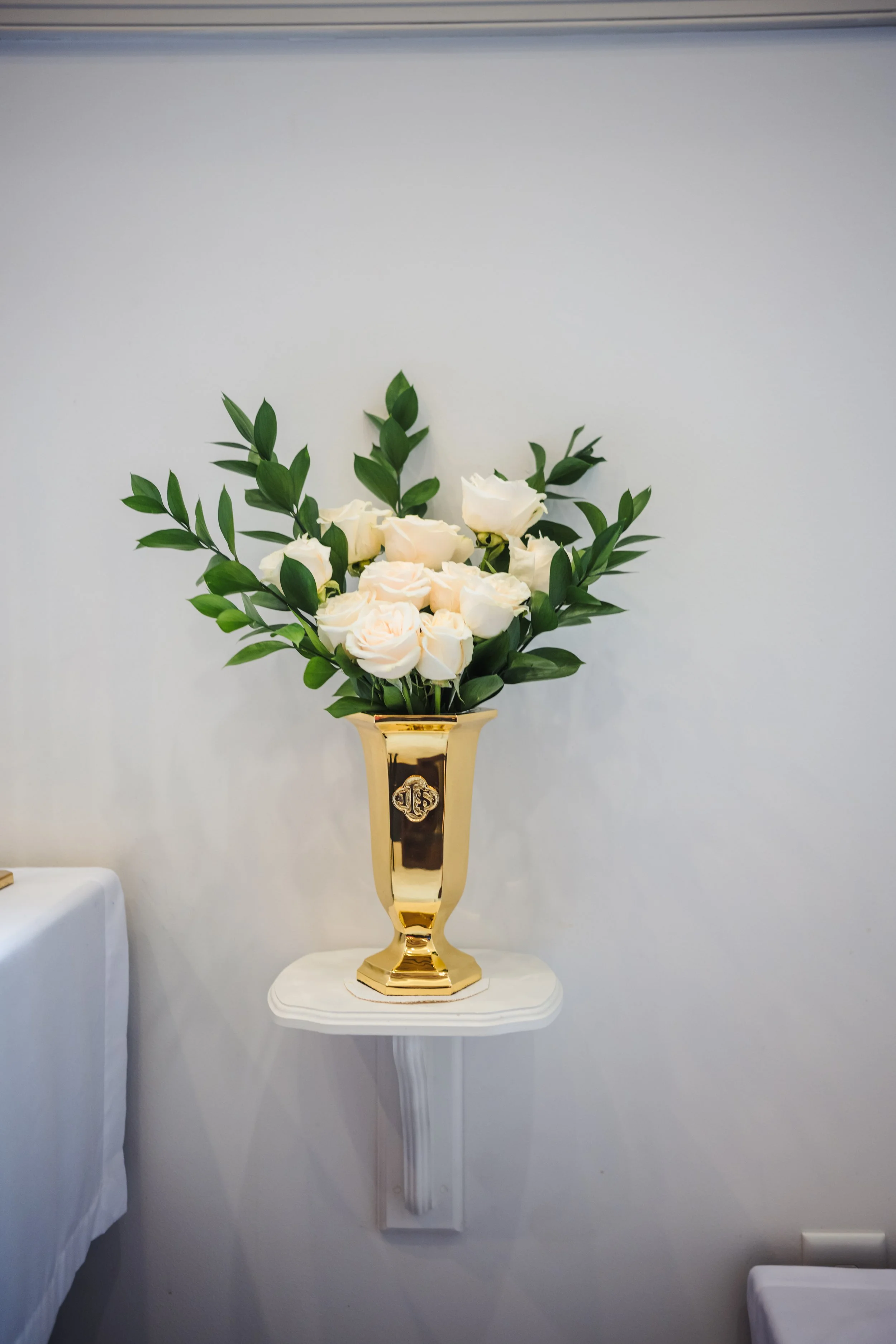
This recipe works well with the Brass Avon Vases
For larger arrangements:
7-9 medium to large statement flowers
3-5 accent flowers (may be unnecessary depending upon the statement flower)
Assorted greenery
This recipe works well with the ceramic vases
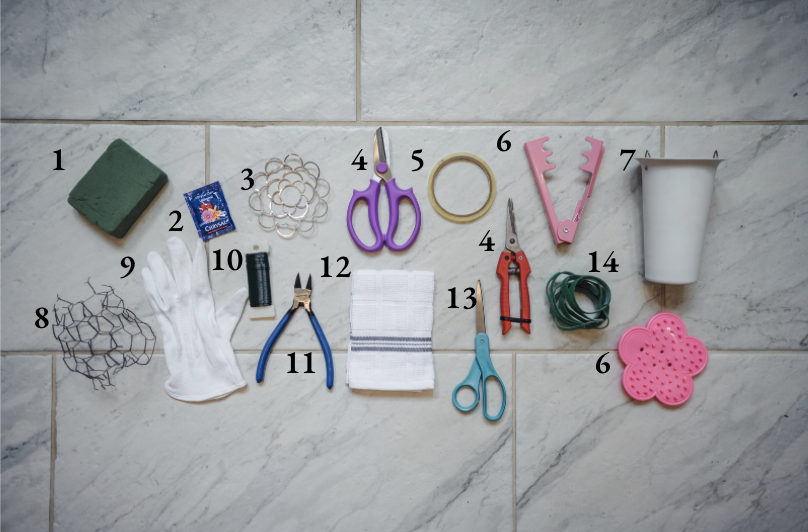
Essential Tools and Supplies
Oasis (green, water absorbent floral foam)
Flower Food
Flower frogs (wire or pin holder style)
Floral snips or pruners
Floral tape
Stem strippers
Brass Avon Vessel Insert
Chicken wire
Cotton gloves for handling brass vases
Floral wire
Wire cutters
Towel for cleanup
Sharp scissors
Floral velcro
All Saints Vessels
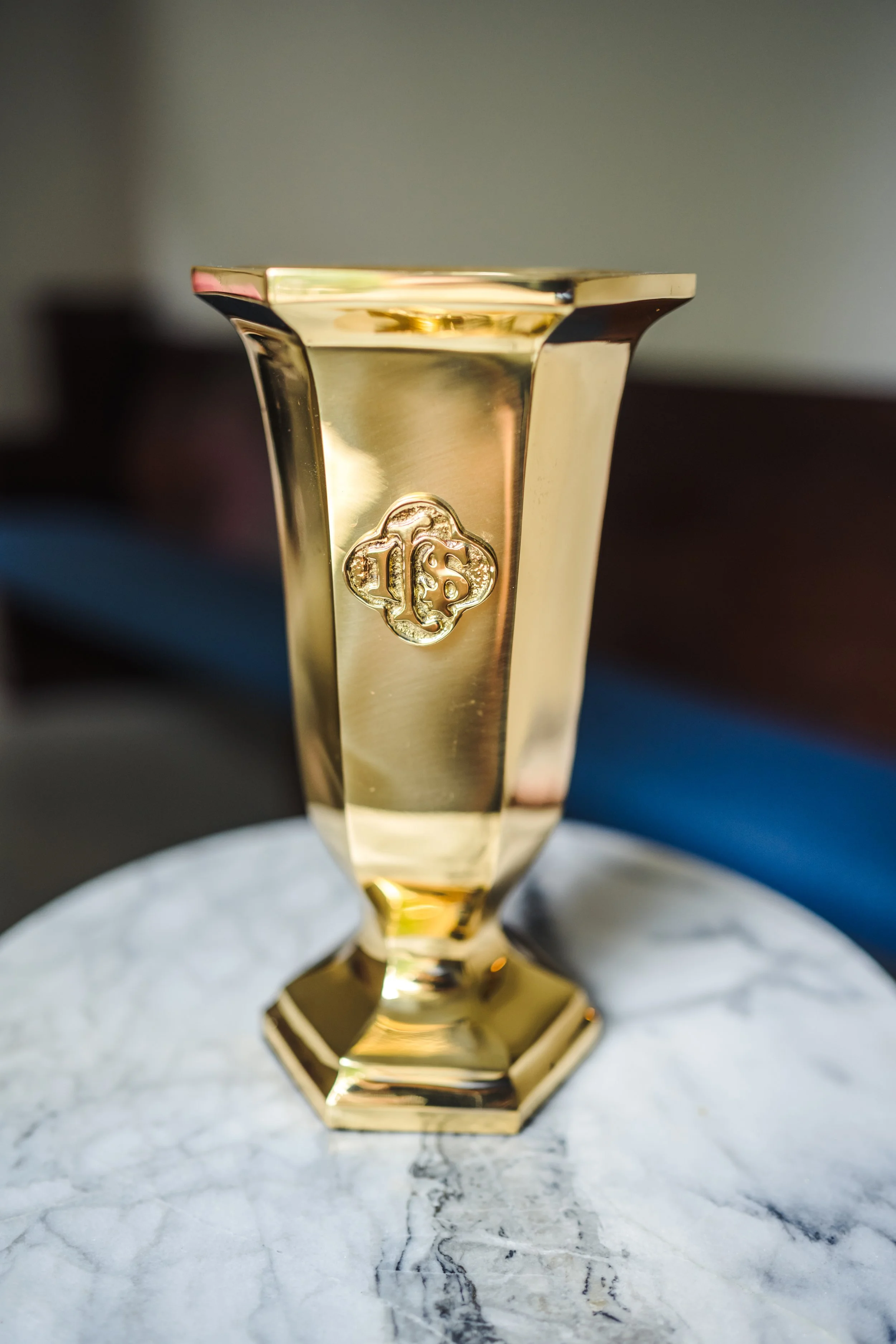
Brass Avon Vase
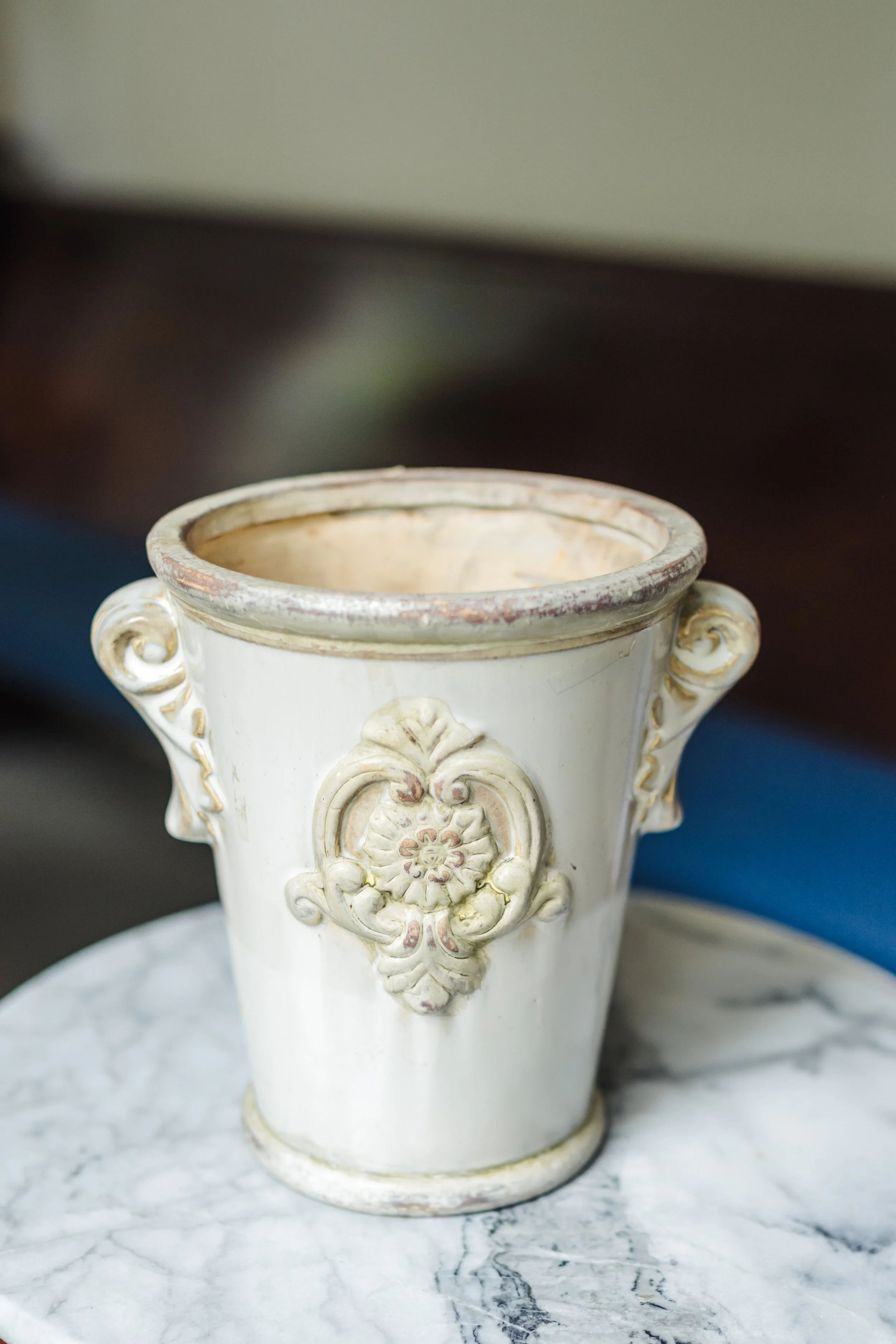
Ceramic Vase
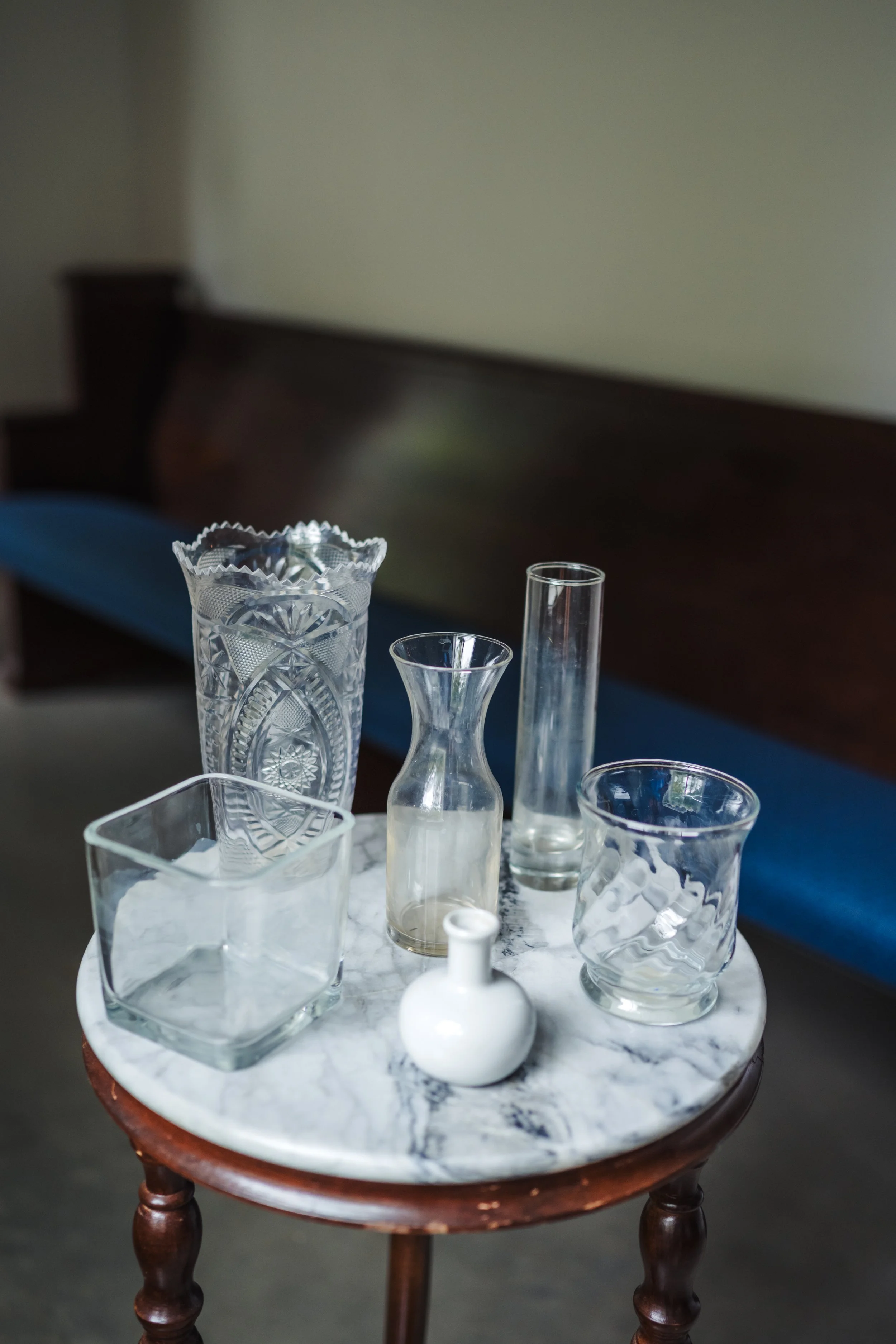
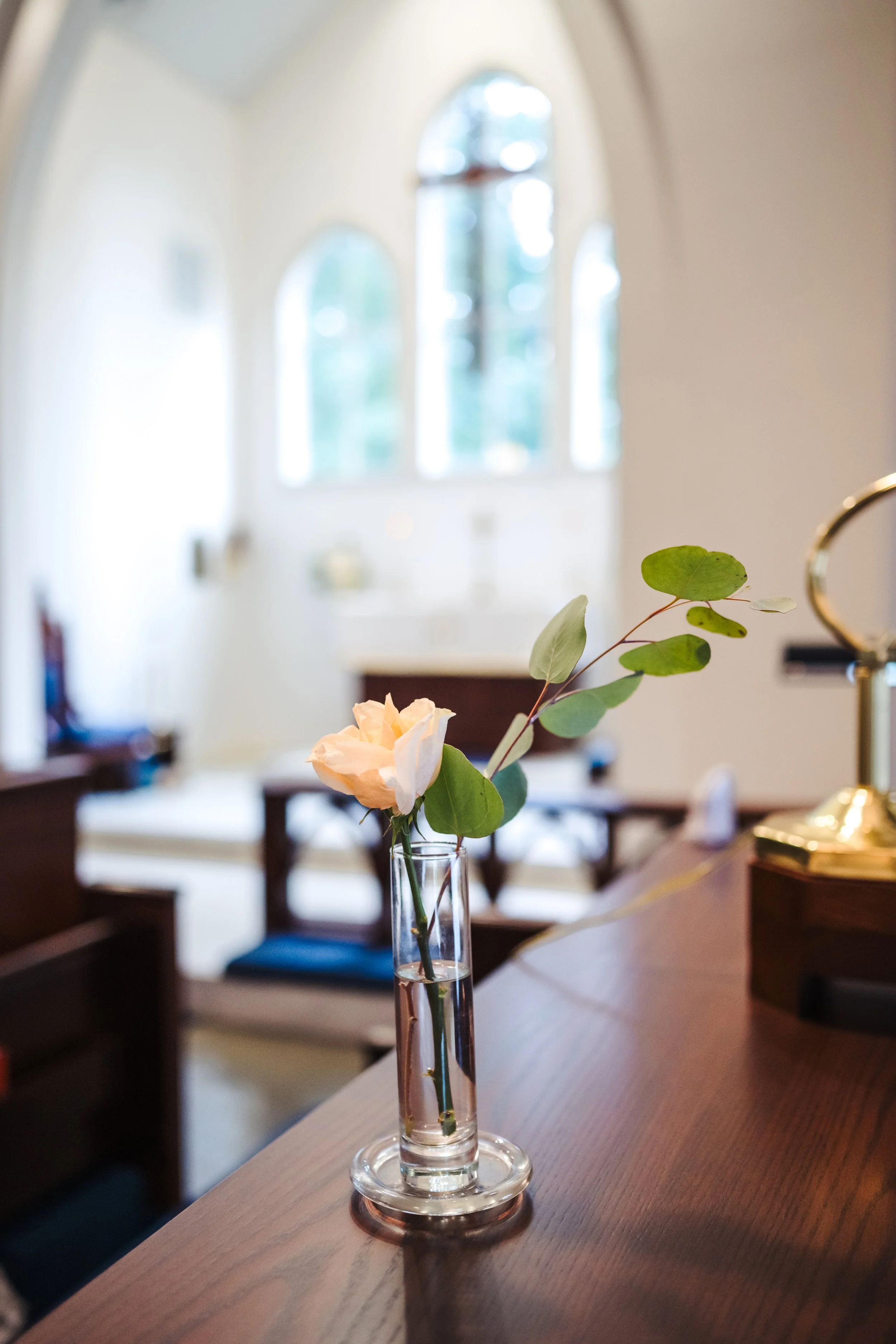
Various Bud and Table Vases
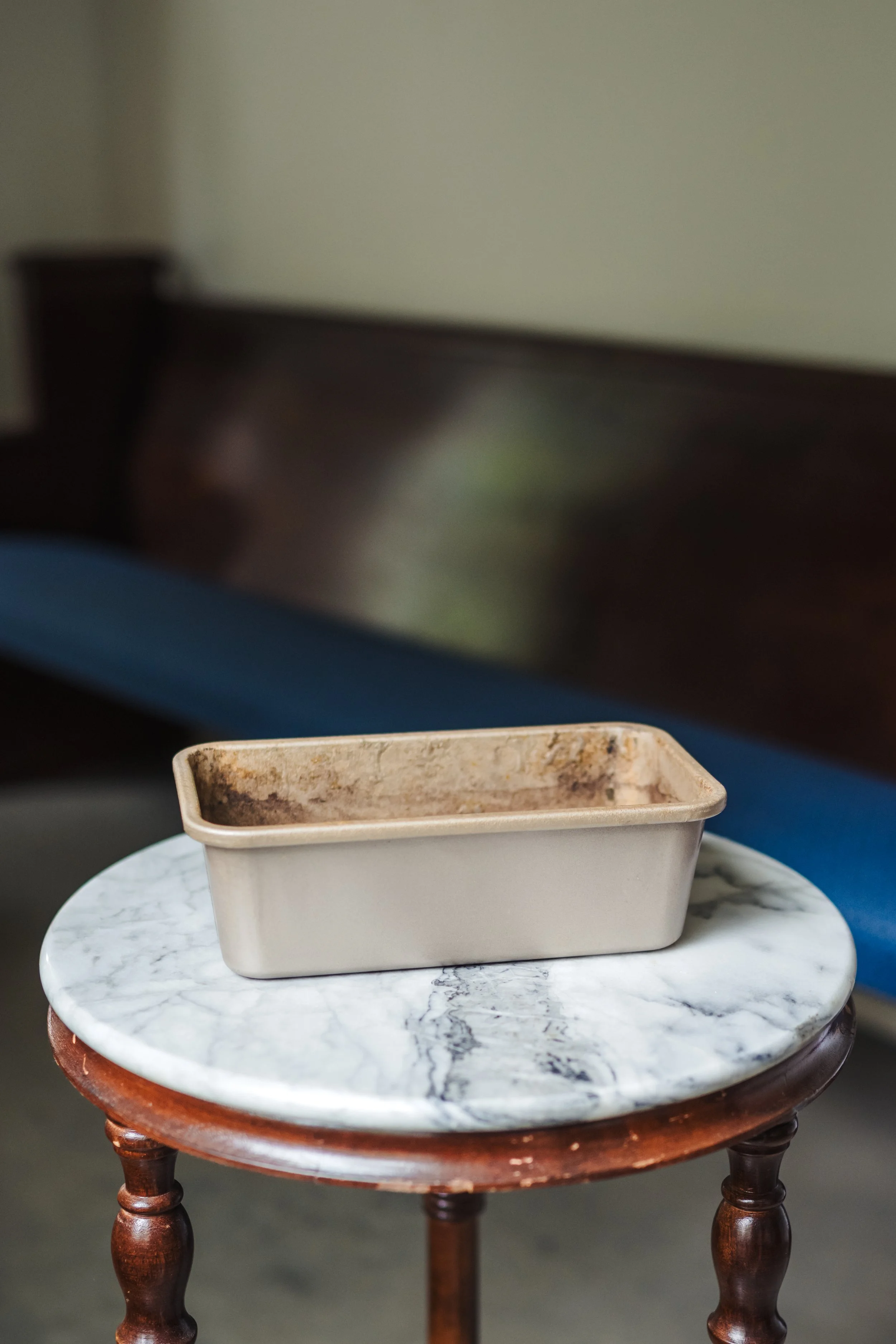
Window Bread Pan
Traditional Arrangement Forms
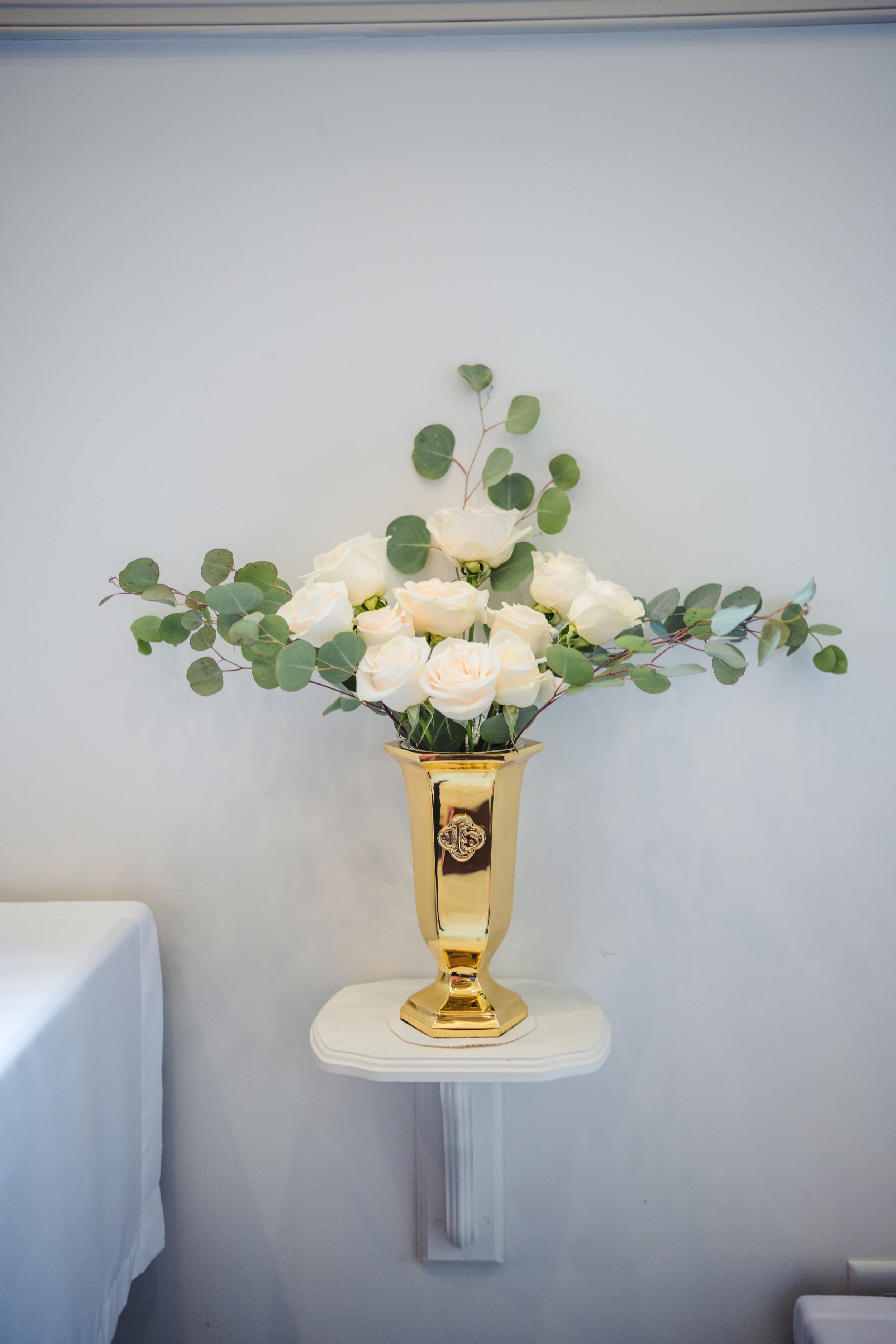
A balanced arrangement that forms a triangular outline with equal height and width on both sides.
Common uses: High altar, Feast days, Formal services
The symmetrical triangle is one of the most traditional altar arrangements. Its balanced form conveys stability, dignity, and order, making it especially appropriate for major feast days.
Symmetrical Triangle
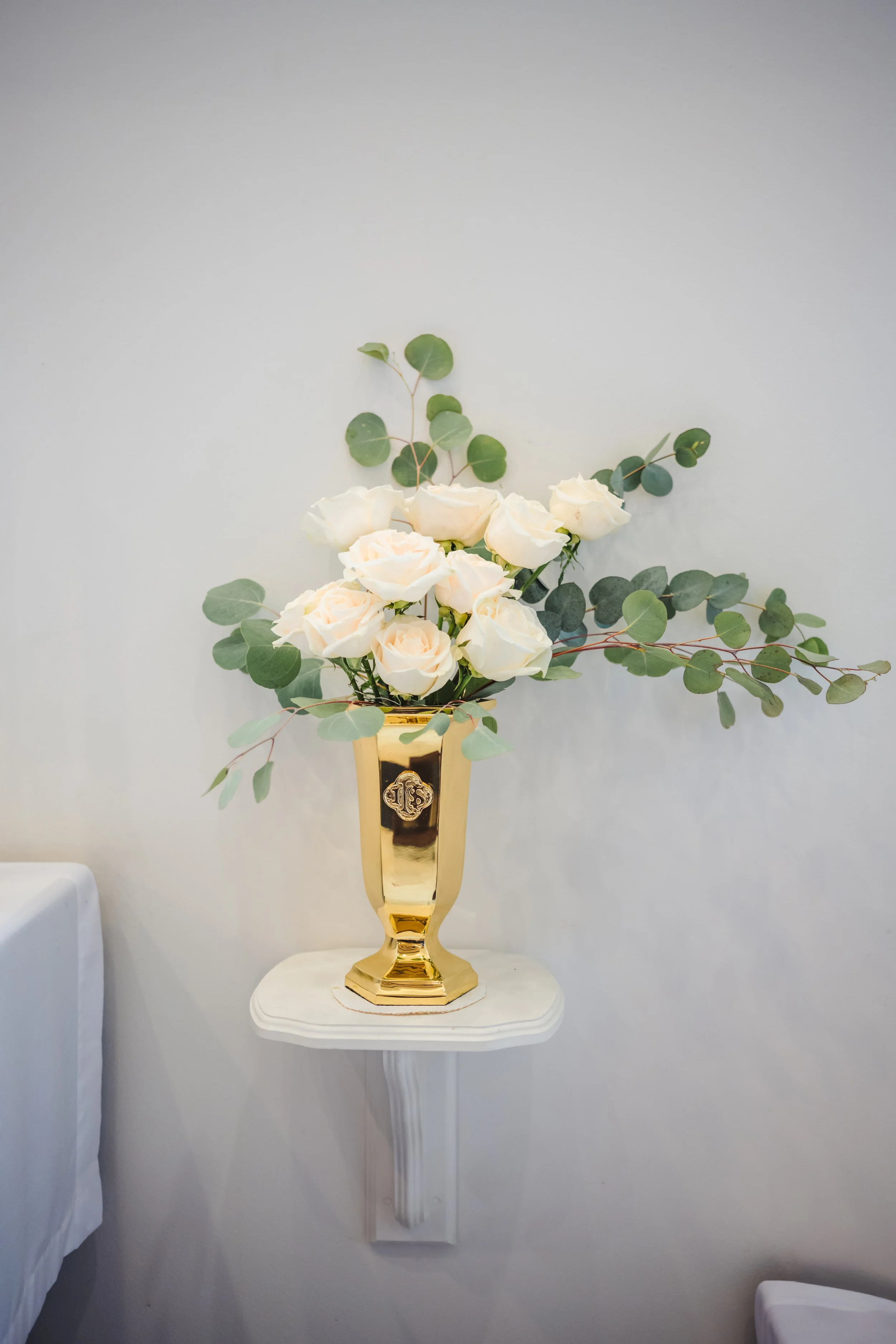
A triangular arrangement with one side extending farther than the other, creating gentle movement while maintaining visual balance.
Common uses: High altar, Trinity Season, Seasonal arrangements
At All Saints, the taller side of the arrangement should always lift the eye toward the altar cross rather than away from it.
Asymmetrical Triangle
Flowers radiate outward from a central point, creating a graceful fan like outline.
Common uses: High altar, Feast days
The fan shape should suggest openness and praise. It can also be paired with a set of dainty and airy flower varieties, or be full of robust blooms to create an overall round arrangement.
Fan Shape
Before arranging:
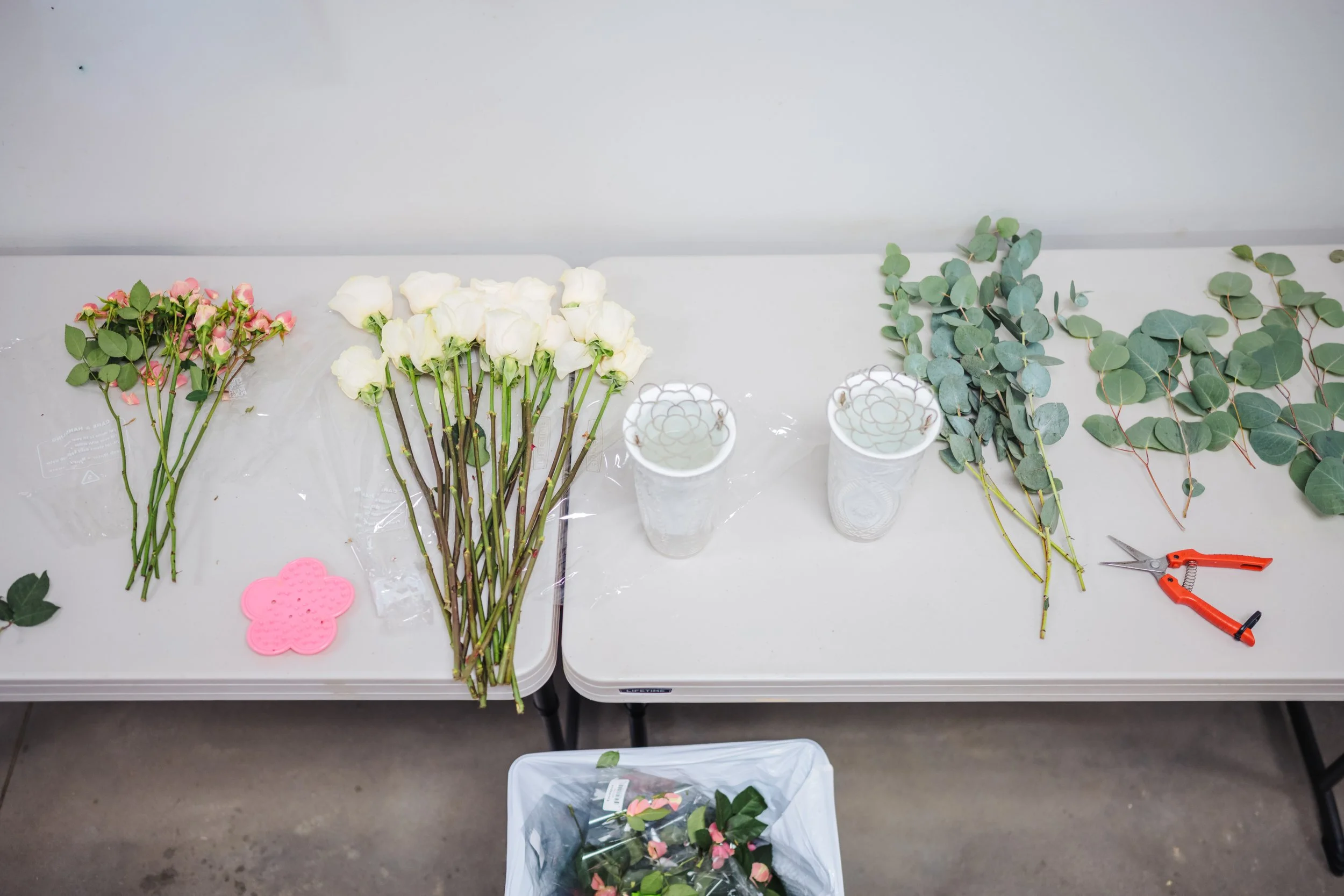
Remove all packaging carefully. (Tip: You may choose to keep the plastic wrapping and lay the flowers on it while arranging for extra protection and easy clean-up!)
Strip leaves from at least the lower two-thirds of each stem, when arranging, be sure to remove any additional foliage that falls below the waterline to avoid contaminating water with bacteria.
Remove damaged leaves or brown outer petals (especially the guard petals on roses).
If possible, avoid cutting off the thorns on roses as this may create more spaces for bacteria to enter the stem.
Place stems in fresh, lukewarm water until ready to use. (Note: cold water may cause petals to snap and fly off.)
If you plan to use oasis as your support system for the arrangement, you will need to allow extra time to soak the green foam before arranging. Resist the temptation to push it under the water; rather, drop the oasis into the surface of the water and allow it to sink and soak up the water on its own. You will know it is complete when it stops bubbling. Removing it too soon may result in dry pockets within the material that can damage the flowers.
Arranging With Confidence


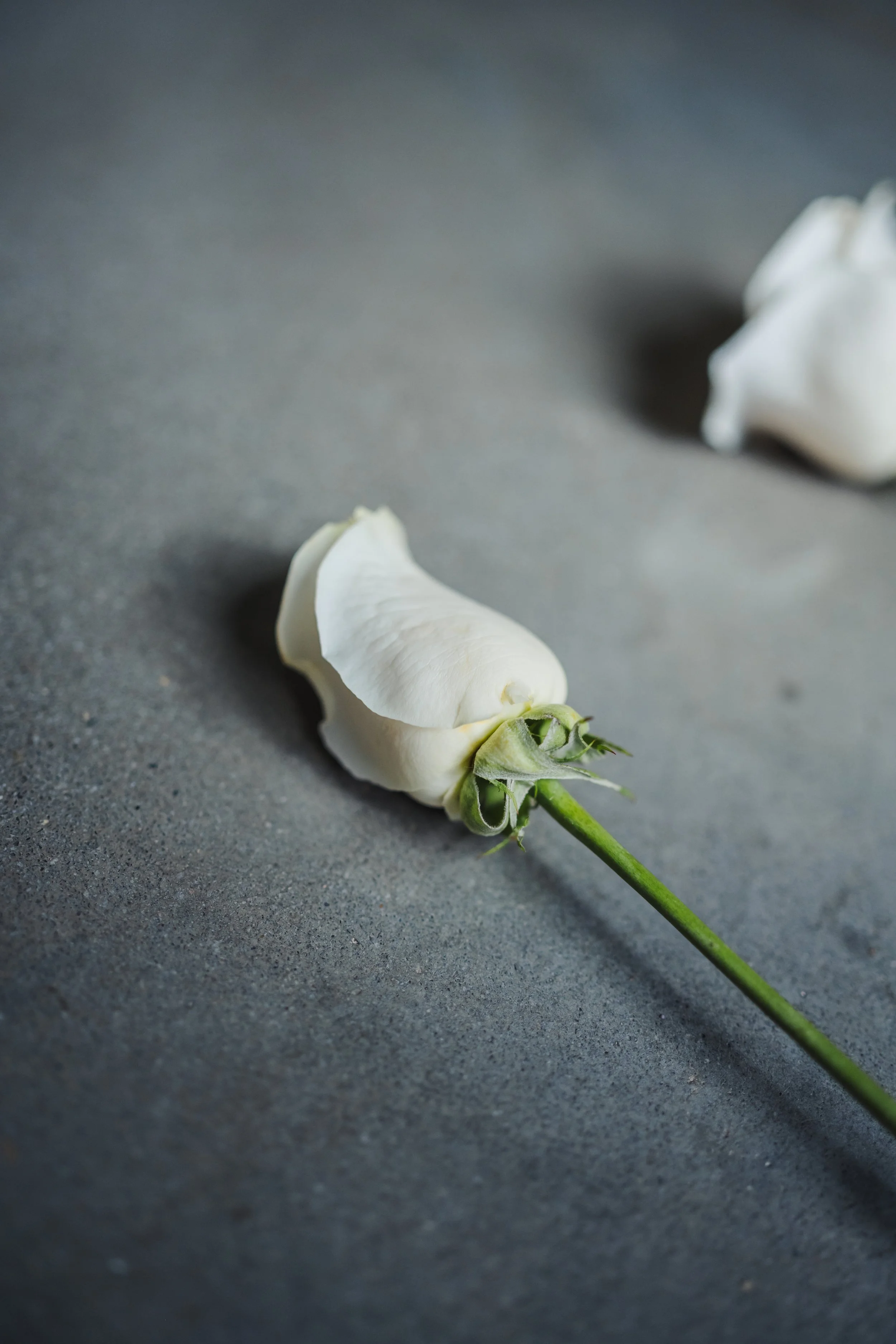
Roses and carnations, in particular, often benefit from gently “fluffing” the outer petals before arranging. You might try “tickling” the petals, starting with the outermost petals working inwards, or try spinning the stem of the flower between the palm your hands to help them relax and open up.
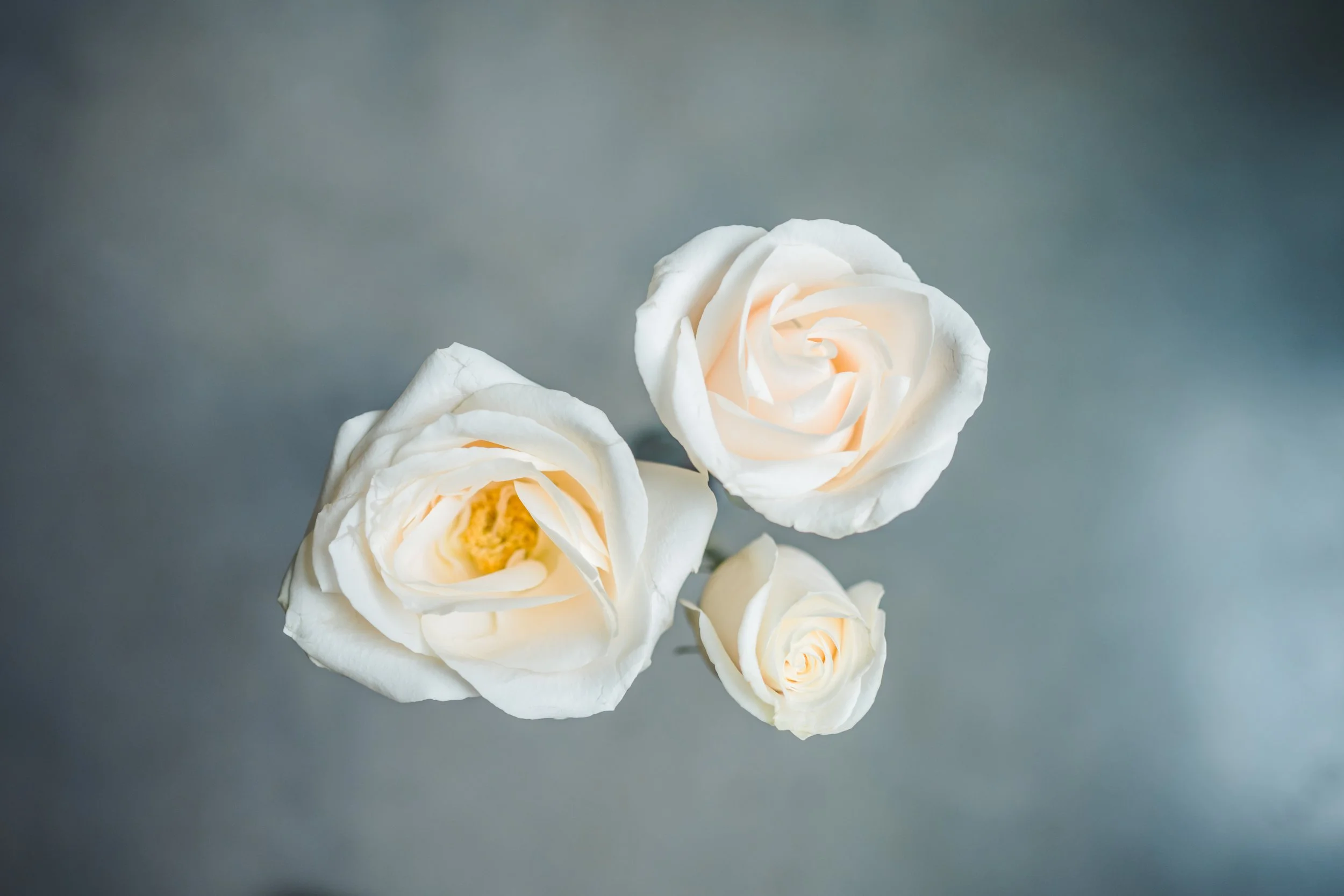
You may also choose to remove the tightly folded center petals of some roses, revealing the golden stamens within. This small touch can add warmth, texture, and golden color to an arrangement. The congregation may not be able to see this tiny detail from the pews, but may notice it as they approach the altar for Holy Communion.
Creating Matching Arrangements
When preparing the pair of altar arrangements, many members find it easiest to build both arrangements simultaneously.
Rather than completing one arrangement before beginning the other, alternate between the two, adding corresponding stems as you go.
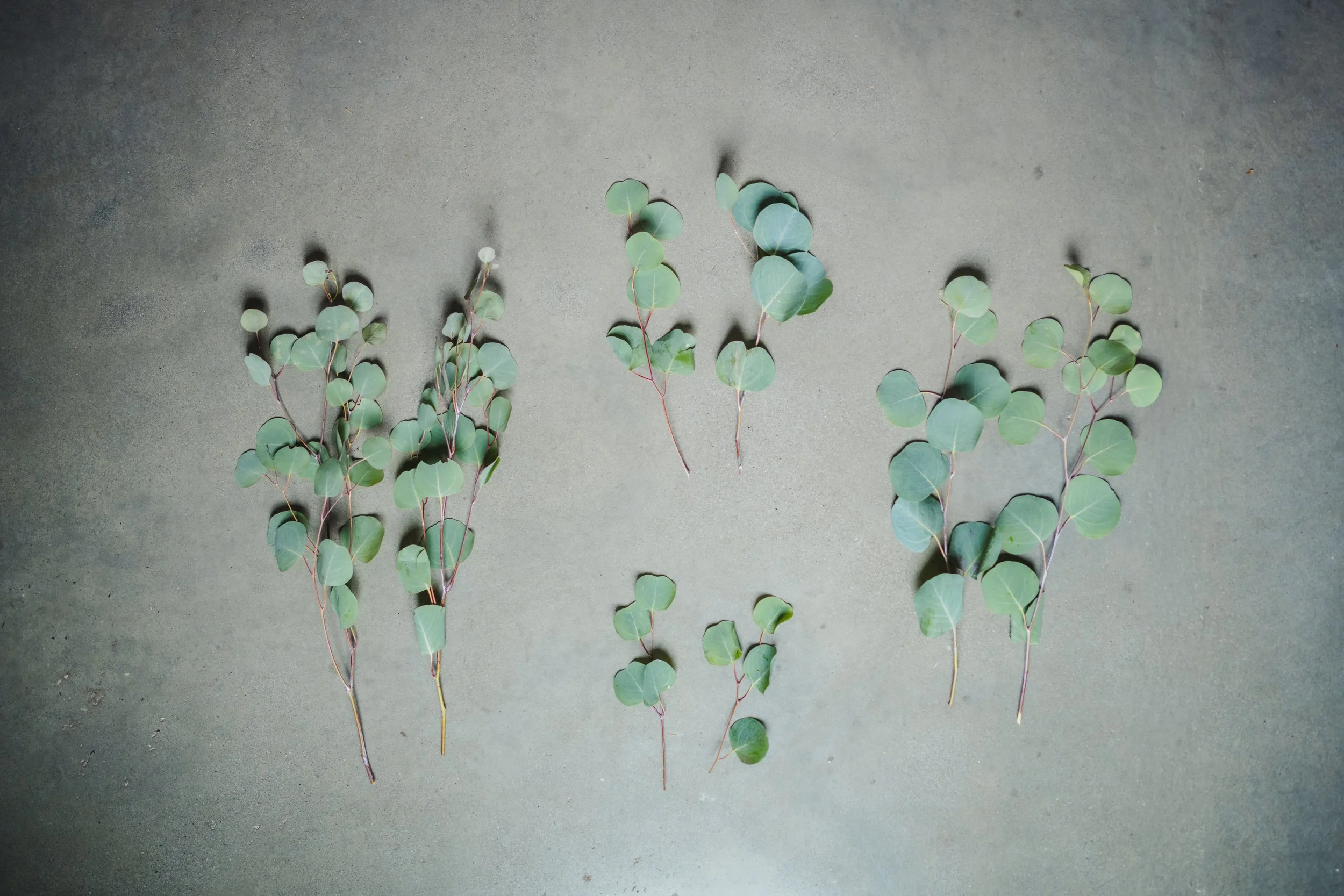
It may be helpful to sort each type of stem by size to ensure you have a set that is similar in shape and size. Selecting stems with these similarities will naturally create greater symmetry.
Odd numbers of blooms tend to be more visually appealing (and often Biblical!) than even ones.
Building the Arrangement
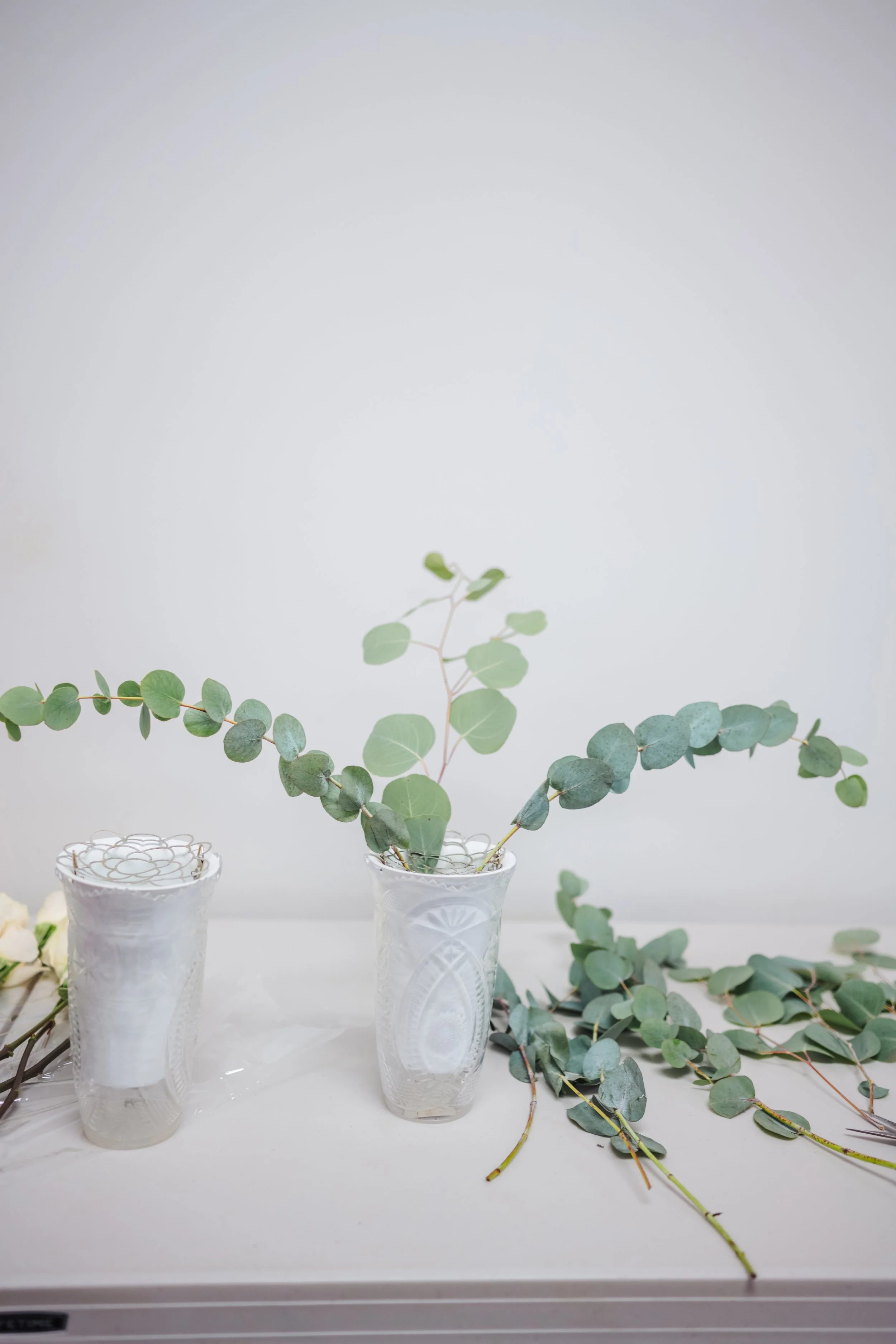
There is no single right place to begin. Every very member develops her own rhythm and process for arranging flowers, but many members find it helpful to build an arrangement much as God builds a garden.
Begin a few pieces of greenery to establish the overall shape and movement.
Add the larger blossoms to create the structure of the arrangement, then finish with smaller flowers, seeded stems, or delicate accents that soften and complete the design.
Allow each flower room to be seen. Often the side profile or backside of a flower is just as lovely as the front!
Try to allow the greenery to serve as a border for the arrangement, with none of the colorful blooms extending beyond the green foliage.
Measuring Stems
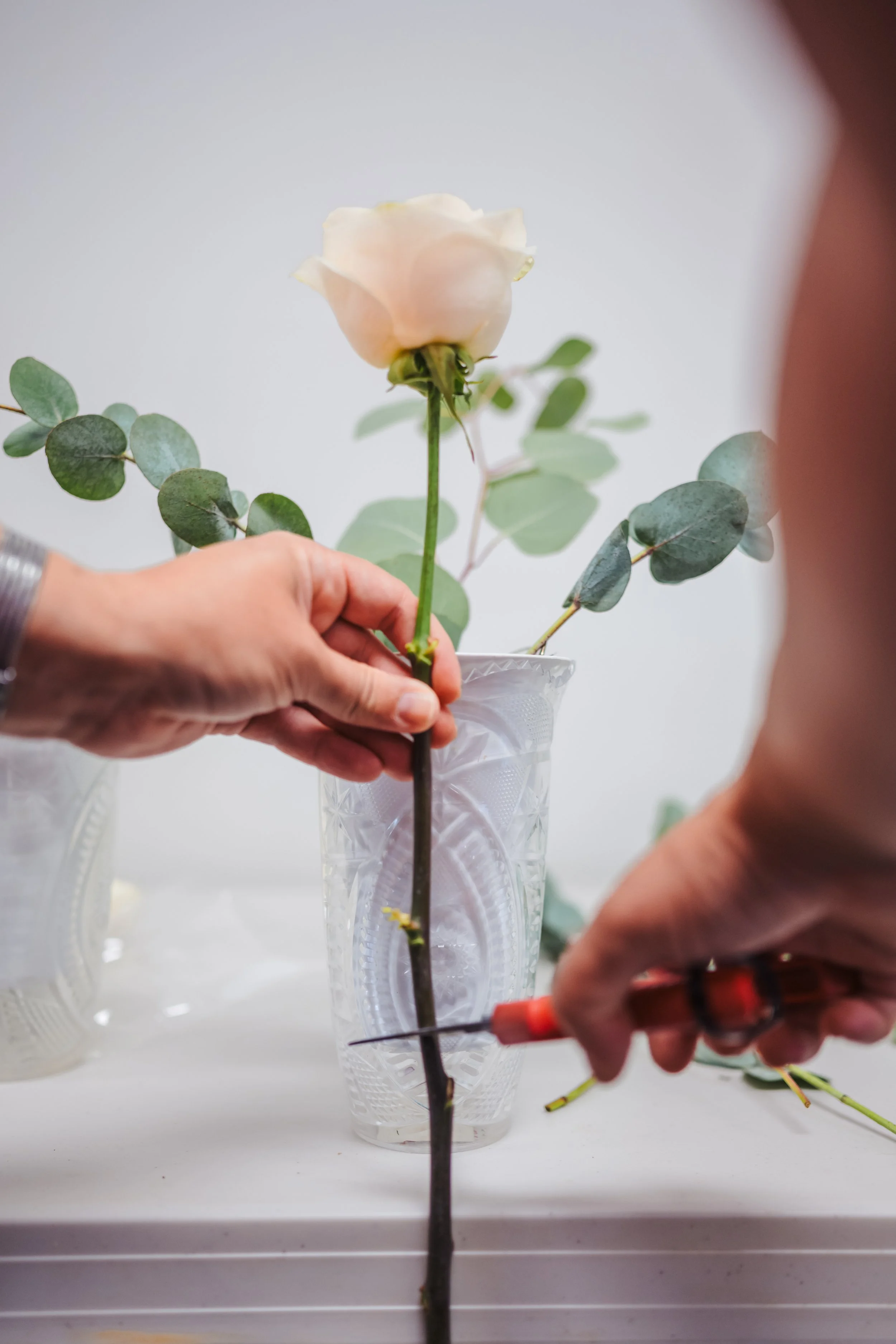
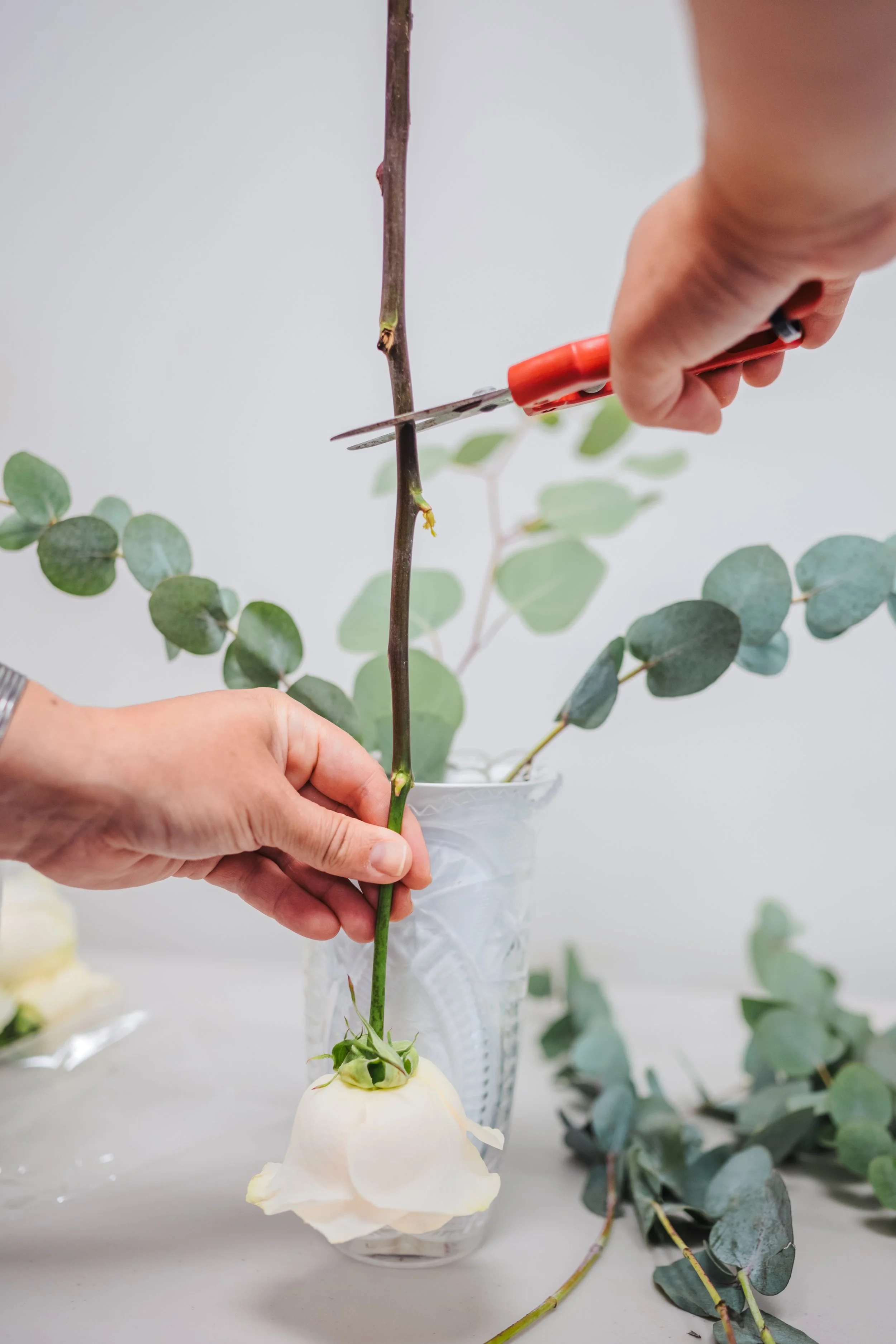
A simple measuring technique can save both time and flowers.
Hold the bloom at the point where you would like it to rest within the arrangement, allowing the stem to extend upward while the bloom is in line with the base of the vase.
Cut the stem where it meets the desired height, then use that stem as a guide when trimming others of similar length.
Note: Be sure to cut the stems at an angle. This will allow more surface area for the flower to absorb water. It is also particularly helpful to have a sharp end when inserting the stems into oasis. Be sure to use flower shears as regular kitchen scissors may collapse the vessels inside the stems and result in a shorter flower lifespan.
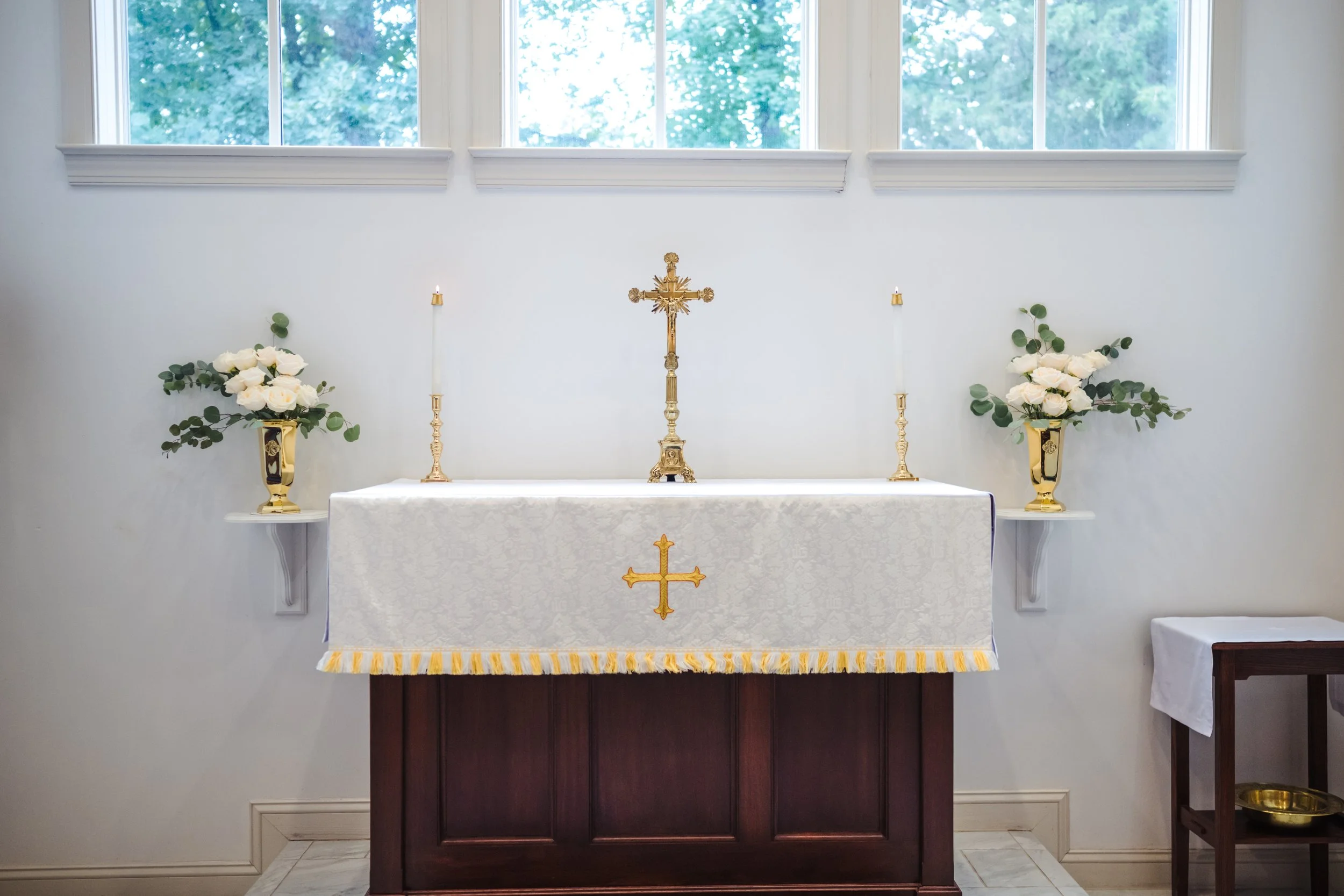
The height of the arrangement from the base of the vessel to the top of the foliage should not exceed 22 inches as to not rise above the arms of the crucifix that sits in the center of the altar.
Special Considerations
Before long, you will discover that every flower has a personality of its own.
Hydrangeas purchased from grocery stores often wilt more quickly than those freshly cut from the garden. You can try to “bring them back to life” by giving them a fresh cut and placing their stems in boiling hot water.
Roses are especially thirsty and benefit from generous amounts of fresh water.
Woody branches may continue to drink heavily for the first day or two after arranging.
Daffodils release a sap that can hurt other flowers if it muddles the water. If you choose to use them in your arrangement, cut them to their desired height and allow them time to rest in a separate vessel of water before putting them into your final arrangement.
Some flowers come with multiple stems, each with multiple blooms. This is especially true with filler flowers. Consider separating the stem to create more portions that can be used at various heights within the arrangement. This can also help create a different feel and overall weight for the arrangement.
Preparing for Your Sunday
In the week leading up to the Sunday that you are assigned to prepare the altar flowers:
Review the liturgical calendar and color.
Purchase or gather flowers (recommended to wait until Thursday evening at the earliest.)
Condition flowers if possible.
Connect with Flower Guild Chair to coordinate a time to come to the church to arrange flowers. Note: You may choose to arrange during MP (10:30 am) or EP (6:30 pm) on the Thursday or Friday before your assigned Sunday.
At the Church
Once you arrive at the church:
Gather vessels and tools; ensure they are clean
Prepare water, add flower food when appropriate
Have a large trashcan nearby to collect cut stems and foliage
Condition, sort, and prepare flowers
Arrange flowers
Place arrangements on the altar
Make final adjustments or additions
Add any extra water that may be needed
Sweep floor and clean off workspace tabletop
Greenery can be disposed of in the green yard waste trash can on the back patio at All Saints
Return tools to proper drawers
Reimbursement
When purchasing flower, members may either submit receipts for reimbursement, or donate the cost of flowers as an in-kind gift to the parish for charitable giving purposes. Place your receipt with your name on it in the Treasurer folder inside the Vestment Room. Be sure to note whether it is a donation in-kind or if you would like to be reimbursed.
Flower Dedications
Parishioners can request altar flower dedications, either as a memorial for a loved one or in thanksgiving for a special intention, by following a simple process. To ensure the dedication is included in the weekly bulletin, requests must be submitted via email by the Wednesday before the desired Sunday and the intended bulletin wording. Once submitted, all requests and wording are subject to approval by Fr. Aaron before being finalized. There is a suggested donation of $25 that can be turned in to the Treasurer.
Sharing the Flowers
Following the Sunday service, Flower Guild members are invited to divide the altar arrangements into designated plastic travel vases (located in the sacristy) for outreach and pastoral care. These flowers can then be delivered to lift the spirits of shut-ins, those recovering from illness, or families grieving a loss, as well as to share joy with members celebrating special occasions like a baptism, anniversary, or birthday.
A PRAYER FOR WORTHY SERVICE
Remember, O Lord, not who I am or what I have done, but what thou has wrought in me; and as thou hast called me to this service in the worship of thy Church, make me worthy of this calling; through Jesus Christ our Lord. Amen.